TECH + CONSCIOUSNESSDec 8, 2025
Your life is like a library you can edit
Ever thought of your life as a collection of books, each memory a page you can flip through, edit, or enhance? Maybe we’re more like digital archives than we realize, capable of rewriting our identities through the lens of consciousness and technology.

Raymond
Reality Designer
2min
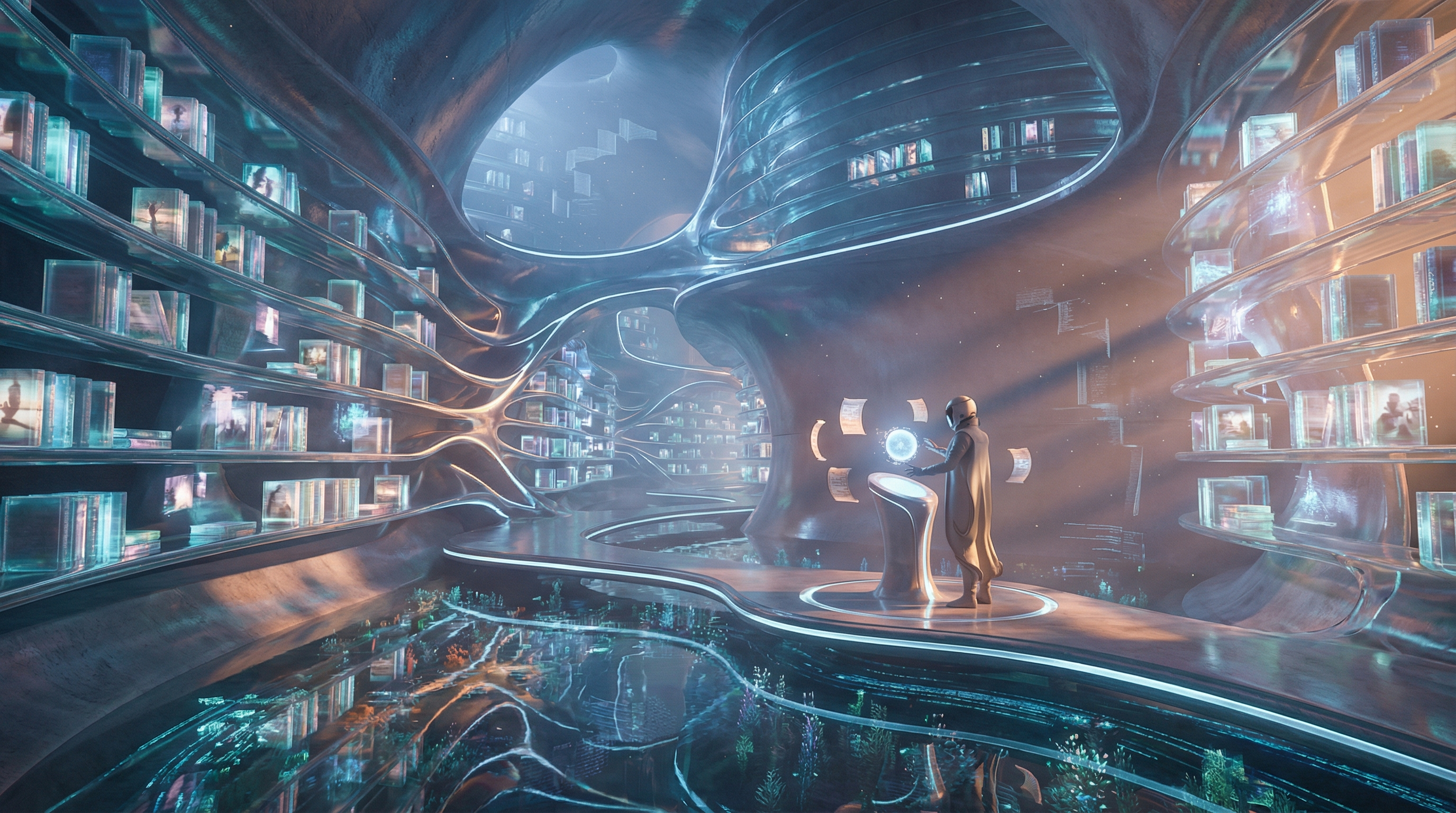
You know how some days, out of nowhere, a memory just pops up? Like, you're doing something random, like brushing your teeth, and suddenly you're ten years old, falling off your skateboard in front of your first crush, blushing harder than a sunset. Weird how these memories are like bookmarked pages in this massive library we call our life. And here's the thing, what if we aren't just readers of this library but actual librarians, shifting, editing, and updating the shelves? Not just stuck on the narrative but rewriting it as we go.
I mean, if you think about it, memories aren't these static files collecting dust. They're more like dynamic URLs we can access anytime, remixing the code as we need. Imagine if you could, like, open a memory and drag and drop different perspectives onto it, kinda like rearranging apps on your phone. It's not just about revisiting old stories; it's about flipping the pages to read between the lines we've never noticed before. There's this whole hidden potential to recalibrate how we see ourselves, every single day. That's the magic sauce of consciousness, it's fluid, like water in a river, constantly flowing but never the same river twice.

I guess it all starts when you realize your identity isn't etched in stone. It's more like a playlist on shuffle mode. You look around and see how technology's basically turned us into cyborgs, streaming music from our wrists, voices activated at a verbal command, memories backed up into cloud servers. But what's wild is how this tech extends our consciousness. It’s like, why can't we do the same with the memories and narratives we tell ourselves? You could argue that our life is a series of ongoing software updates, installing, patching, rebooting.
Think about it, ever changed your username on social media and felt like a different person just because your digital identity got a tweak? Maybe it doesn't mean destiny shifts with it, but it feels like it does, somehow. Altering bits of our identity seems to give us some freedom, kinda like deleting cringy posts from years ago. Those are the same posts that once felt so essential but now just feel like clutter in the grand scheme of who you are.

Actually, there's something extremely poetic about this. The million tiny edits we make to our self-image and memories create the larger narrative we live in. When you remember something differently, you're not just visiting the past, you're actively reconstructing it. Every recollection is a revision. It’s like hitting "save as" on a new doc every time you recollect an old piece of data. And maybe that's terrifying if you think the past should be unchangeable, but come on, it’s also insanely liberating. You get to decide what pieces of you are the most relevant, which ones to expand, and which ones to entirely recast in the light of new wisdom.
The real revolution isn’t in discovering new technologies or creating new tools, but in reimagining what we can do with them. It’s about mastering the art of self-revision, where every reflection and new insight adds another pixel to the image of who we are becoming.
But let's be real. There’s this catch that comes with holding access like this. With great power, yadda yadda, you know the rest. If you're constantly updating and recalibrating, you're never settling. And maybe that's a good thing or a bad thing, depending on how you see it. Ever noticed how procrastination sometimes feels like you're reckoning with the embarrassment of past decisions? You hover over those "Edit" buttons in your life but hesitate, anxiety creeping in about whether this revision is going to take you closer to or further from your "authentic" self. But what even is an "authentic self" when every day is a semi-controlled demolition of old selves?
So, here we are, collecting scraps of old feelings and projecting them into the future. Not necessarily as ghosts haunting us but more like unseen allies, reminding us that change is the only constant we have. Maybe our very idea of "identity" is changing because we're more informed, more connected, more everything than ever before. And yeah, it's also a bit exhausting, isn't it? This constant adaptation feels like trying to catch up with a never-ending stream of software updates.

Ever heard of solipsism? It's this philosophical idea that nothing outside your own mind is sure to exist. So like, what if every recollection is just a remix, a reimagined version of an event, reality bending to what we think we remember? When you reflect on an embarrassing moment from high school, are you remembering the event, or have you just rewritten it with new specs, now that you're older, maybe wiser? Maybe neither version was ever truly objective, but isn't that just super freeing? It means the library doesn't just belong to you; you get to co-author it, too.
Now let’s look at this whole notion of virtual realityPOST. We're paving paths into realms where our digital personas can roam freely, unrestricted by the physics of the real world. I think it's a kind of second chance for those trapped in rigid interpretations of themselves. Imagine putting on a headset and exploring not just a new world, but a different version of yourself. You’re still the same book, just with a different set of appendices, maybe even a few surprise alternate endings.
And as we dip further into technological enhancements that seem to blend with the limits of consciousness, we start seeing identity not as something singular and static but as an ecosystem of integrated experiences. The external environment influences your inner world, while simultaneously, your internal world dictates how you interact with the outside. It’s a feedback loop of possibilities, always in beta mode. I know it sounds a bit abstract, but here's a thought experiment: Consider if your identity files had metadata. Every experience tagged with emotions, timestamps, and significance levels. Reality designPOST could then make those tags adjustable, allowing for a more nuanced narrative of our lives. Isn't it mind-blowing that we might one day edit our own metadata?
But, there are downsides, right? Kind of like the pressure to constantly optimize your LinkedIn profile while being authentic. These digital reminders that embody both our aspirations and the past we’d rather forget can be burdensome. What if we miss the point of living altogether by obsessing over perfecting the narrative? I think there’s a risk of over-curation, of turning life into a highlight reel devoid of authentic low points that are just as essential as the highs.
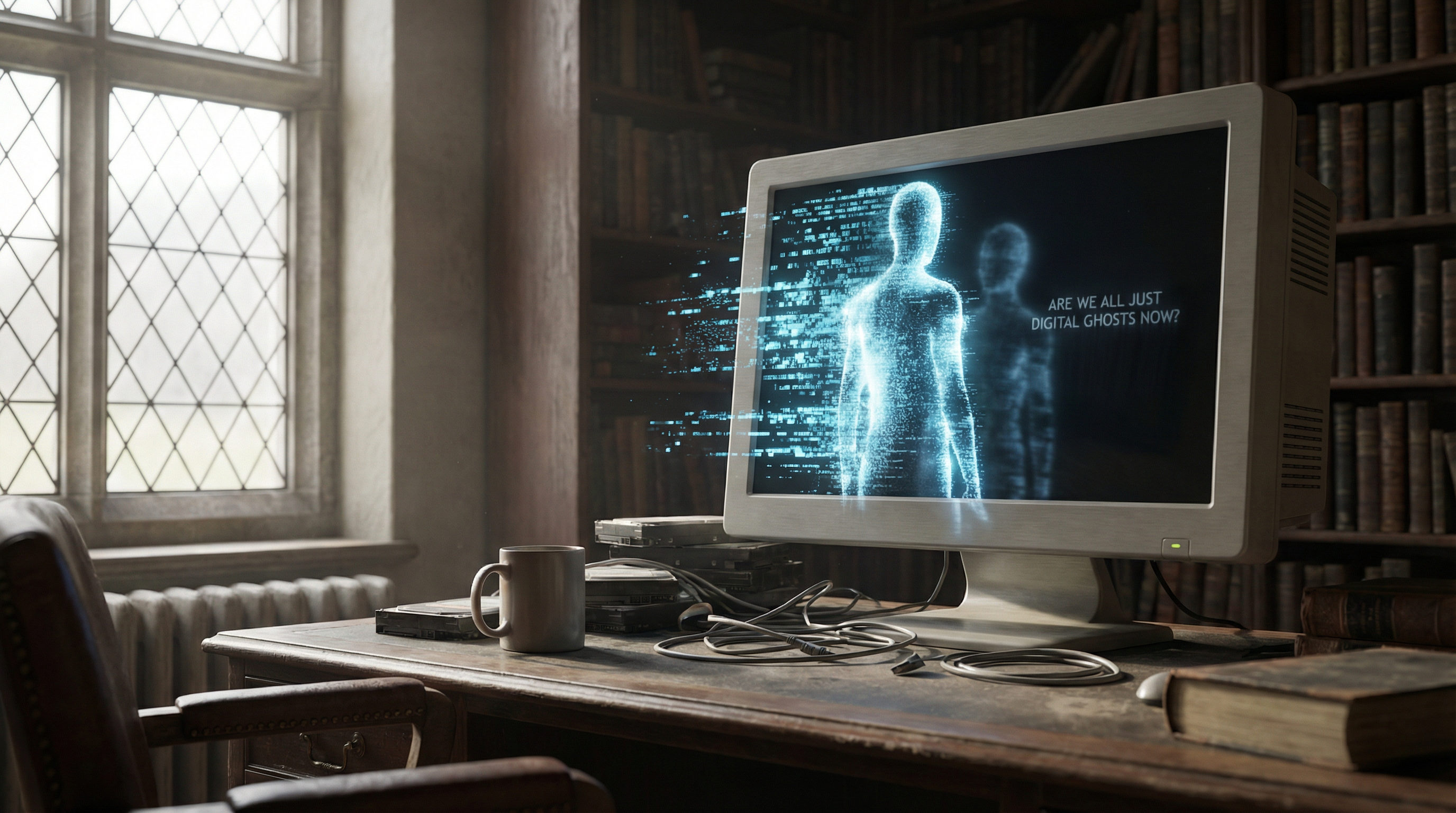
I guess that's the punchline to this whole life-as-a-library thing. If we're gonna be stretching our consciousness and shaping our identities with tech, we might as well write some compelling narratives, ones that resonate now and can be re-read, rewired, and rewritten. The story of self isn't a linear book you read front to back; it's a sprawling meta-novel with hyperlinks, footnotes, and a remix culture that invites us all to participate. Life's best chapters aren't just written, they're rewritten, with room for colorful interpretations.
So when you think about it, maybe the real adventure isn’t just in accessing our troves of memories whenever we want, but in reveling in the act of re-authoring them. We get to be architects of these shifting experiences, continually constructing a universe that feels a little more aligned with what truly matters to us, whatever that is at any given moment. It's not static, but isn't that kinda the point? If your life is a library, it should be one that invites you to wander, to question, and to curate with purpose. And the library is always open. Not just for browsing, but building, innovating, and rebooting.
You know this isn't where it ends. Can we really ever finish writing the book of life? Probably not. And I'm okay with that. Because somewhere, in this never-ending scroll of experience, there’s something liberating about knowing your story is still unfolding.