TECH + CONSCIOUSNESSNov 29, 2025
I've been rethinking what reality even means..
So much of what I've taken for granted about reality has been shaken up by recent tech advances. I'm wondering how AI is pushing the boundaries of not just what we can do, but how we think about life itself.

Mitch
Reality Designer
I was sitting at my usual spot in the corner of this tiny café when it hit me. The sun was just beginning its lazy descent, coloring the sky in shades of pink and orange that seemed almost impossible. Not picture-perfect, but close. There was this momentary pause, like the whole world stopped just to let me breathe in the enormity of it all. That's something AI hasn't captured yet, the way reality feels in those unscripted gaps. But it got me wondering, not for the first time, about what reality even means when we're busy designing it in ways never before imagined.
Especially now, with AI and augmented reality elbowing their way into our everyday experience, it feels like we're holding the pen and we don't even have a map. You know how they say reality is what you perceive? That’s feeling less and less concrete every day. So, I've been rethinking it, not in an existential crisis kind of way, but more like, what are the rules now? how tools shape our thinking
I've been playing with some new design tools, ones that promise to "extend your consciousness," whatever that means. And they work, sort of. Until you realize that what they really do is merge you more with the digital than you'd originally planned. Suddenly your thoughts have layers, tabs even. I found myself consulting AI not just for hard facts, but for emotional nuances, like what mood a room should have to make people feel welcome. Sounds weird, right? But then I started to see the room differently, not just as space, but as something living that I could tune like an instrument. Or maybe it was tuning me. I'm still figuring that part out.
Maybe reality isn't a fixed state but a canvas, and AI is handing us new colors we never knew existed.
And maybe that's where reality's been shifting for me. In these tiny, almost imperceptible ways that make me question what’s tangible and what’s code. When you work on reality design, you end up with this backlog of thoughts and moments where reality isn't static, but a canvas constantly being painted over. There's a surreal quality to it, like being in a game where the rules keep shifting, and notice, you're the one building the rulebook as you go.
I remember catching up with a friend who’s been knee-deep in this virtual art project. She told me, "It's not about mimicking reality, but amplifying it." That stayed with me. Amplifying reality implies there’s something already there, waiting to be seen under a different lens. It's not about reinventing the wheel, but maybe finding a more dynamic way for it to turn. And let's face it, aren’t we all looking for ways to amplify our reality, especially when the typical ways feel so limiting?

If reality design is about breaking boundaries, our understanding of consciousness must also flex. I'm starting to see consciousness as less of a state and more of a spectrum. It's less about knowing and more about experiencing deeply. AI, AR, VR, all of these are just tools on that spectrum, peeling back layers to reveal new dimensions in what we once thought was only a single flat chapter. why people avoid deep work
There's a project we're tinkering with at Reality Designers, one that’s focused on using immersive environments to teach people about conscious creation. It’s less about telling people what they're supposed to create and more about inviting them to question, What could you create? And from there, what do you dare to think about how that shapes your reality? The line between creator and experiencer blurs, and I find it beautifully chaotic.
Which brings us back to AI. There's something mesmerizing and slightly terrifying about it. Like a partner in a dance who not only follows but anticipates your moves, sometimes a step ahead, sometimes a misstep. I’ve been thinking of AI less as a tool and more as a companion, perhaps even an extension of our own consciousness. A reflection. That's a strange idea, right? That a line of code might understand the texture of your thoughts. But it opens up the question of what it means to be conscious in a world that is itself learning to be conscious through us.
It's like the edges of reality are blurring, and AI is handing us the chalk to redraw them—what if life's canvas is bigger than we ever imagined?
Take this for example: a friend of mine was recently deep in a VR experience that wasn’t just visually compelling but emotionally evocative. There was music playing softly in the background, engines of sound waves touching heartstrings. "It wasn't just something I saw," he told me later, "But something I felt. Like the virtual was real." Weird, right? Yet that's where reality and consciousness are playing their most interesting games these days, not on opposite teams, but as collaborators. What happens to our perception of what's "real" when everything feels real?
This is where philosophy starts to mix beautifully with technology. Reality becomes less about what’s out there and more about what’s in here (gesturing around the noggin). Which begs the question, how are we designing not just our environments, but our consciousness? Are the spaces we're creating nurturing the kind of growth we hope for, or do they limit us with every algorithm? Each new tool, every groundbreaking innovation, crosses a threshold that forces us to reconsider how we define life’s fundamentals. how tools shape our thinking
Even the simple act of carrying your phone around becomes an act of navigation through multiple realities. Your physical environment, of course, but also your phone’s - a gateway to an almost infinite series of realities. The notifications, the apps, the connections, all serving to tug you in different directions. I mean, haven’t you ever felt like you need GPS just to keep track of your own thoughts lately?
Which makes me think about mindfulness, about presence. Can you be mindful in a virtual world? Or is that an oxymoron? Because it feels like, in this new era, this post-digital age, being present might mean being aware of the physical and digital simultaneously. And maybe that's just the next frontier of consciousness, learning to live in harmony with the realities we create, knowing they’re as real as the mug in my hand right now. why people avoid deep work
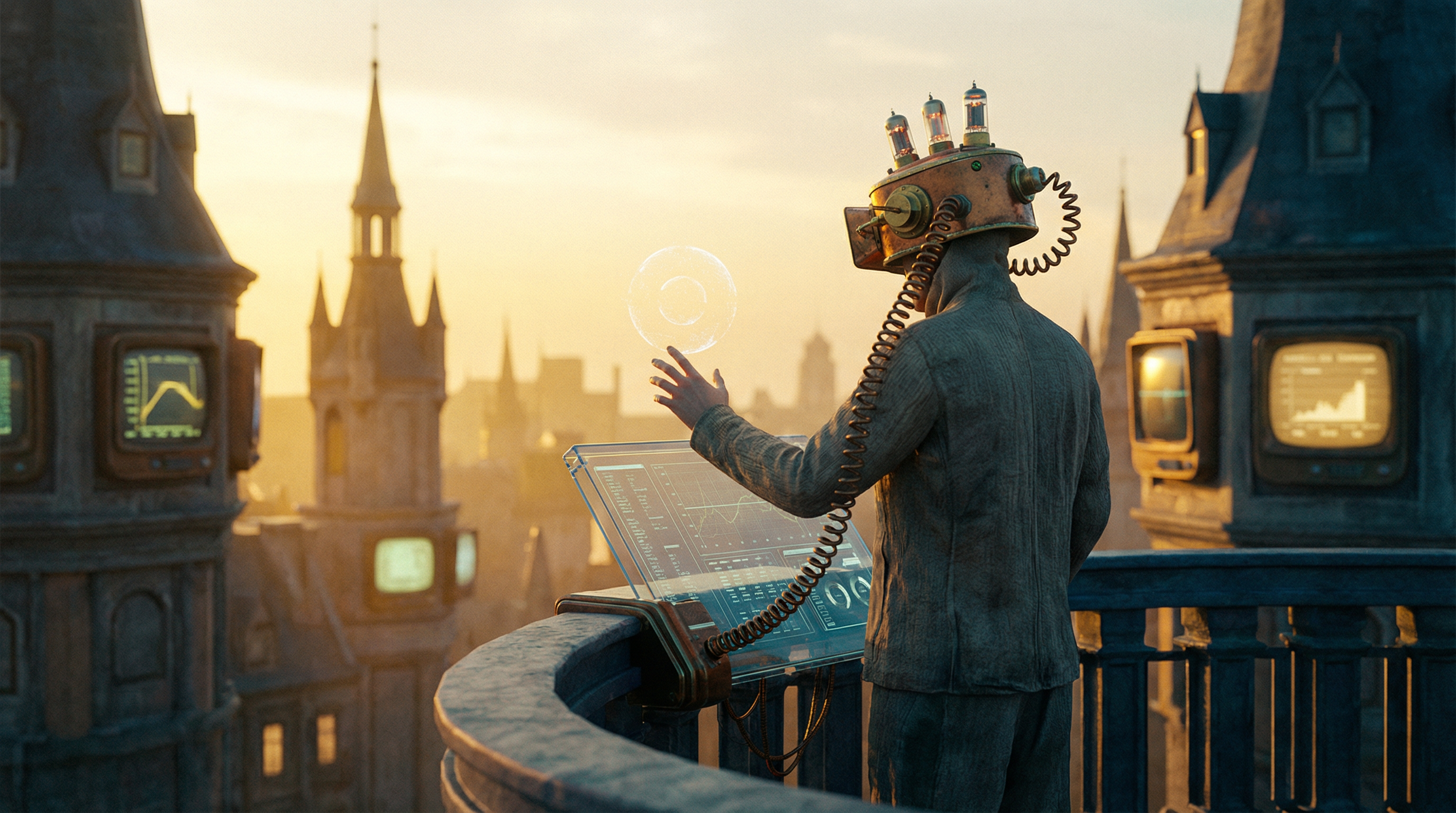
Our lives are more interconnected with technology than ever before. The lines between digital and physical, conscious and coded, blur more with each innovation. And it's got me wondering, does this make us more human or something entirely different? Maybe there’s a parallel path evolving here, where consciousness isn’t just about being human but about being aware in our creations.
But there’s something about that which feels right. The world has always been a mix of the seen and unseen, and maybe today’s tech is just pulling back curtains rather than creating illusions. Which, I suppose, is making me pay more attention to how I service my realities, wondering if the only barrier we’ve ever really had was our willingness to redefine what’s possible. There's something there about momentum I haven't fully figured out yet. Like separating the spoon from the syrup of consciousness and now we’re wondering what the syrup tastes like by itself.


